BEST THEATRE EXPERIENCE, EVER. That was my take on the Seattle Immersive Theatre‘s production of “Romeo + Juliet”. Of course, I’m no expert on theatre (we’ve seen a few Shakespeare productions at Ashland and Boise, and both Shakespeare and contemporary stuff during my other lifetime in Los Angeles — and I did work in the 1970s in my art consulting period with Luis Valdez of El Teatro Campesino, Peter Coyote of the San Francisco Mime Troupe and then on the California Arts Council, and other local LA theatre groups. And Nik has a wonderful book of Shakespeare verbal insults!).
But this was absolutely extraordinary. We were able to get some last-minute tickets to the last performance of the week (and I thought at first that was forever, but you can still get tickets for shows into at least the first week of April — and you should; fly in from anywhere in the nation, in the world, to see this stuff. I mean it, really.) and so after driving all day from E-OR, we landed just in time to check in with Ivi and the Seattlite Cousins, and have dinner. Then Ivi (who has already seen the show) sped us off to the “undisclosed Seattle warehouse” in the Queen Anne District where we were to have at it.
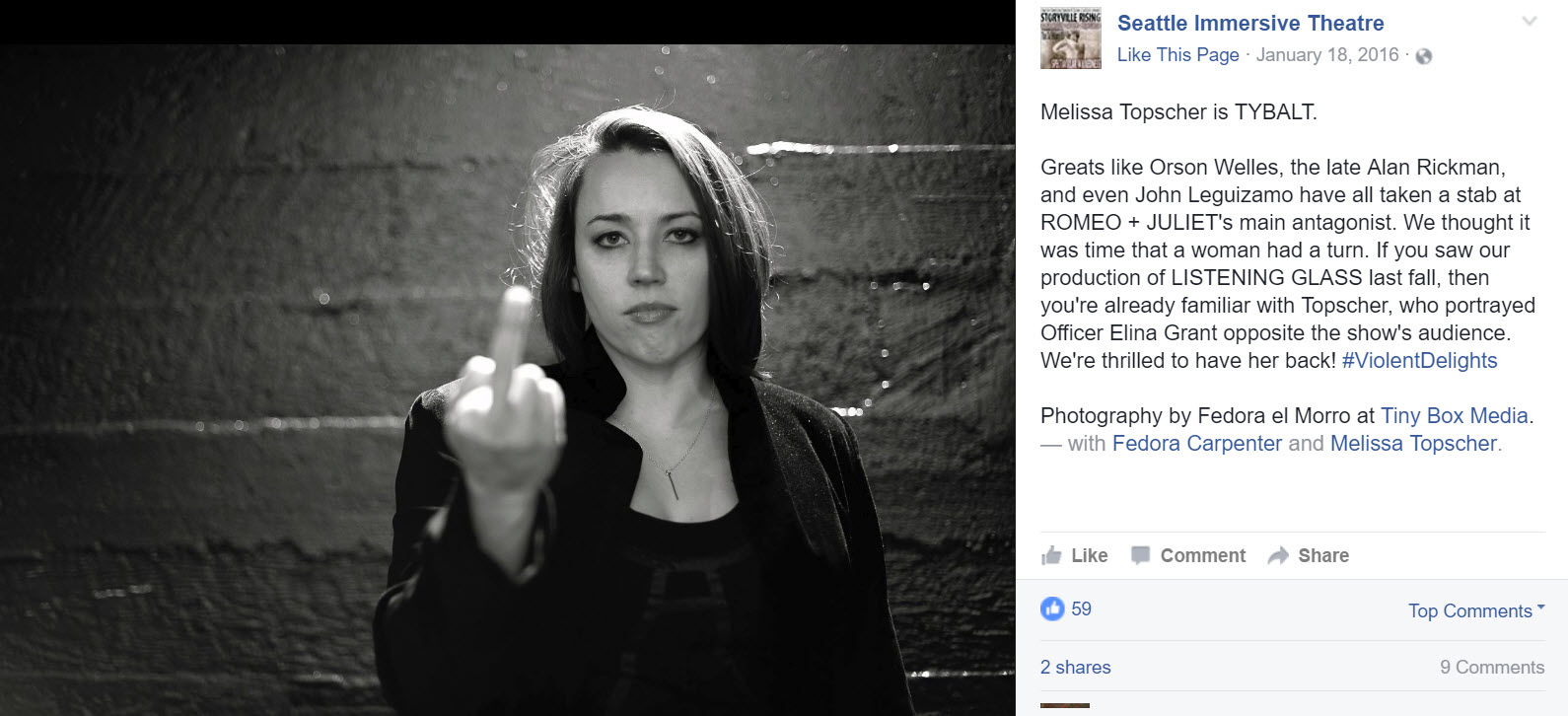
While dropping by the Seattlites at Chika & Jared’s, we saw Melissa for a few seconds, then she had to disappear to prepare for her part in the proceedings. In case, you don’t know, Melissa plays the role of Tybalt (breaking a gender barrier), the member of Juliet’s Montague family who challenges Mercutio, a member of the rival Capulet family and Romeo’s pal, to a duel. When we first met Melissa a couple of years ago — before becoming wedded to Rohit and joining our extensive family — we were charmed by her sweet, gentle nature and learned that she had a degree in theatre but apparently was mostly working as a fitness trainer and doing some improv on the side, when she and Rohit converged. But to see her in action on the stage … wow. Leather and chains and tattoos, with an overlay of punk and hip-hop, and a voice that could knock you over … that was just the beginning. As the play progressed, Melissa/Tybalt was making comic utterances and curses on the periphery (we have been told that her improv skills kicked in for these elements). She proved able to unleash to a torrent of action and emotion.
By the third or fourth — I couldn’t keep track — scene, a fight breaks out in the open market square (more about that later) between Tybalt and Mercutio. Holy cow. Melissa engaged with a gymnastic/acrobatic/martial arts/dancing sort of explosion in her bout with the Mercutio character, himself gifted in such dynamics. Backflips, flying kicks, leaps across people and props, kungfu-like motion across a “moonlit” expanse of stage. Utterly amazing. While Mercutio bites it in the end, ultimately Tybalt does battle next, to her/his demise, with Romeo.
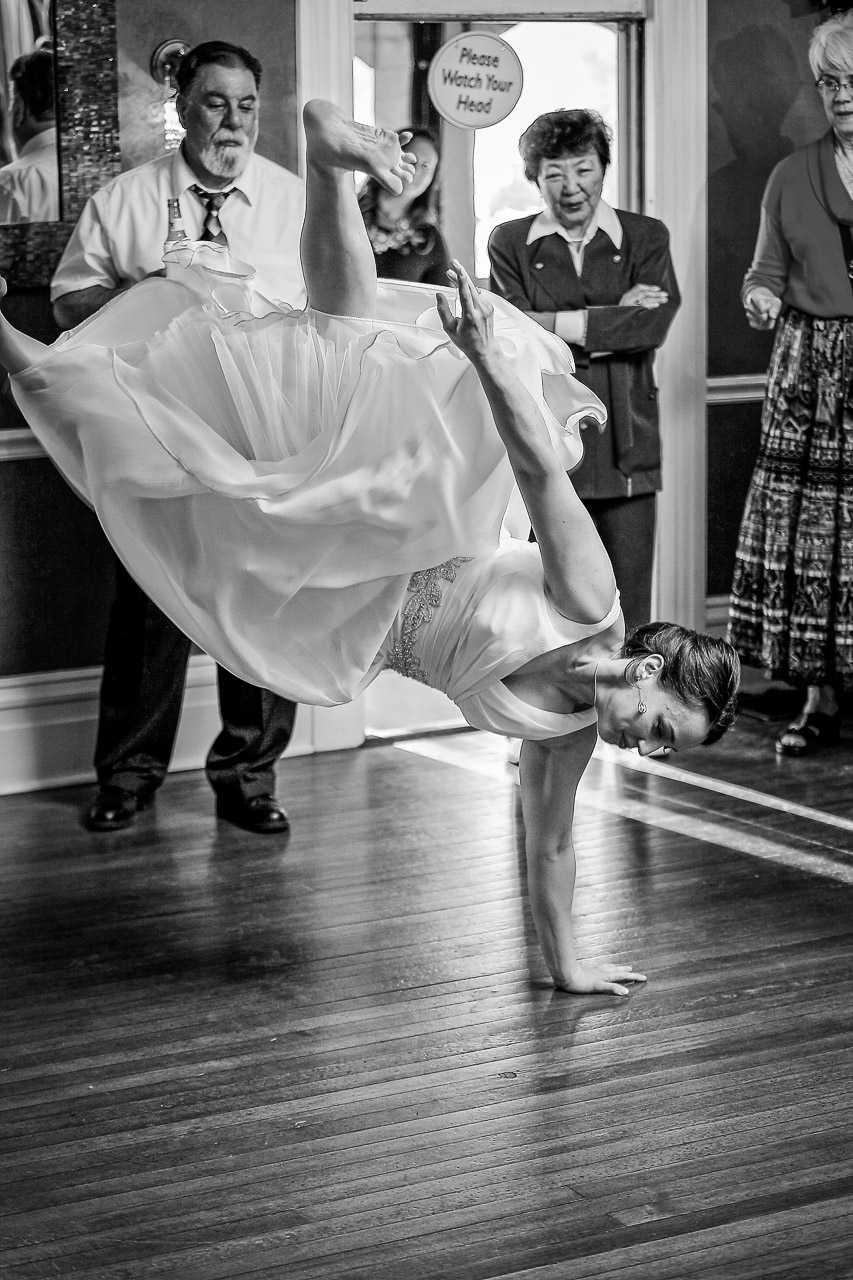 SIDEBAR: Perhaps we should be reminded at this juncture of one of the finest wedding photos (who was the photog?) ever, which documents Melissa in a spontaneous bridal gesture in celebration of the occasion. This is only a tiny inkling of what we experienced at that undisclosed Seattle warehouse venue that night.
Ivi had been telling us about it for some time, but never got around to sending along any visual documentation. Seems that billboards, banners and posters have been appearing around Seattle featuring uber-talented, ravishing beauty Melissa’s tattooed frontal aspect in promotion of the Theatre’s production. So, I entreated Ivi to later drive me in the daylight to the Undisclosed Seattle Warehouse where I could make my own photographs. Herewith …


There is so much more to be said about the Seattle Immersive Theatre and Romeo + Juliet that it may have to continue in a future installment. And of course more photos are to come of the Seattlites, perhaps even including one or two of Melissa as civilian.